
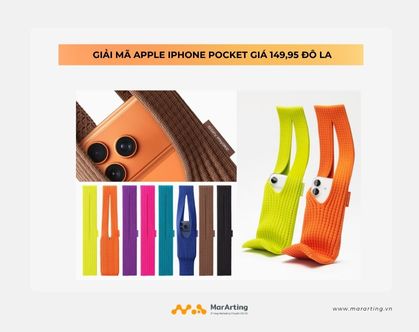
Apple drew attention with the launch of the iPhone Pocket, a knitted accessory priced from US$149.95.
At a time of rising prices, a small knitted bag costs as much as a smartwatch or a pair of noise-cancelling headphones. Its price invites buyers to think beyond its practical use.
From a brand strategist’s perspective, the iPhone Pocket is a case study in luxury positioning. Its appeal lies in what owning it says about the buyer’s taste.
This article examines the US$149.95 price tag and how Apple and Issey Miyake created value around the product.
Contents
1. Product Separation: Tangible Value
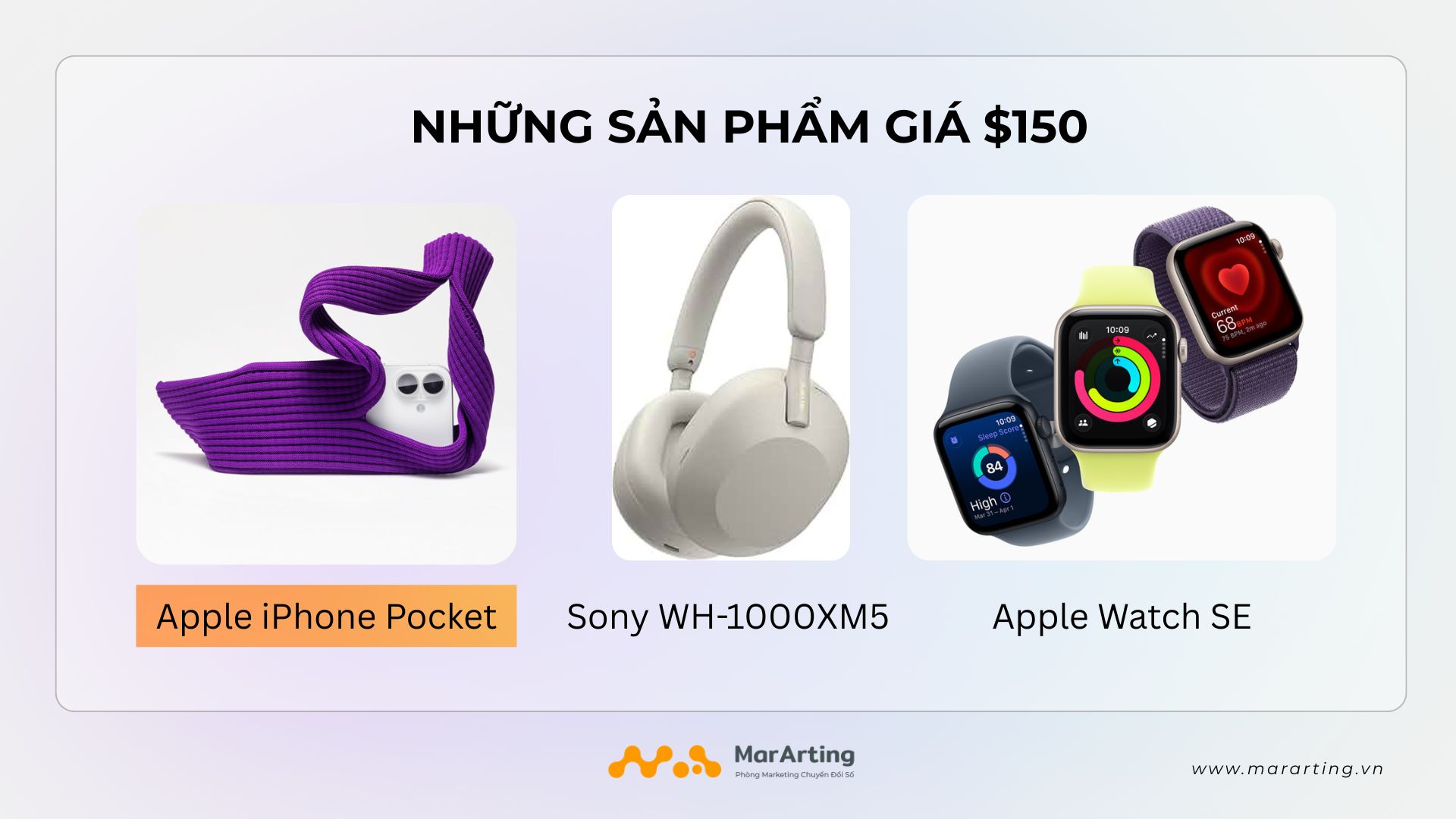
Before diving into the philosophy, look at the physical nature of the product.
The Apple iPhone Pocket is essentially a small, stretchy bag. However, the language used to describe it is an important part of positioning strategy:
- Technique: “Seamless 3D Knit Technology”, is actually a weaving technique without seams.
- Materials: “Single recycled polyester fiber”, a fancy way to call plastic fabrics but labeled “green”, adds a layer of value to environmental consciousness.
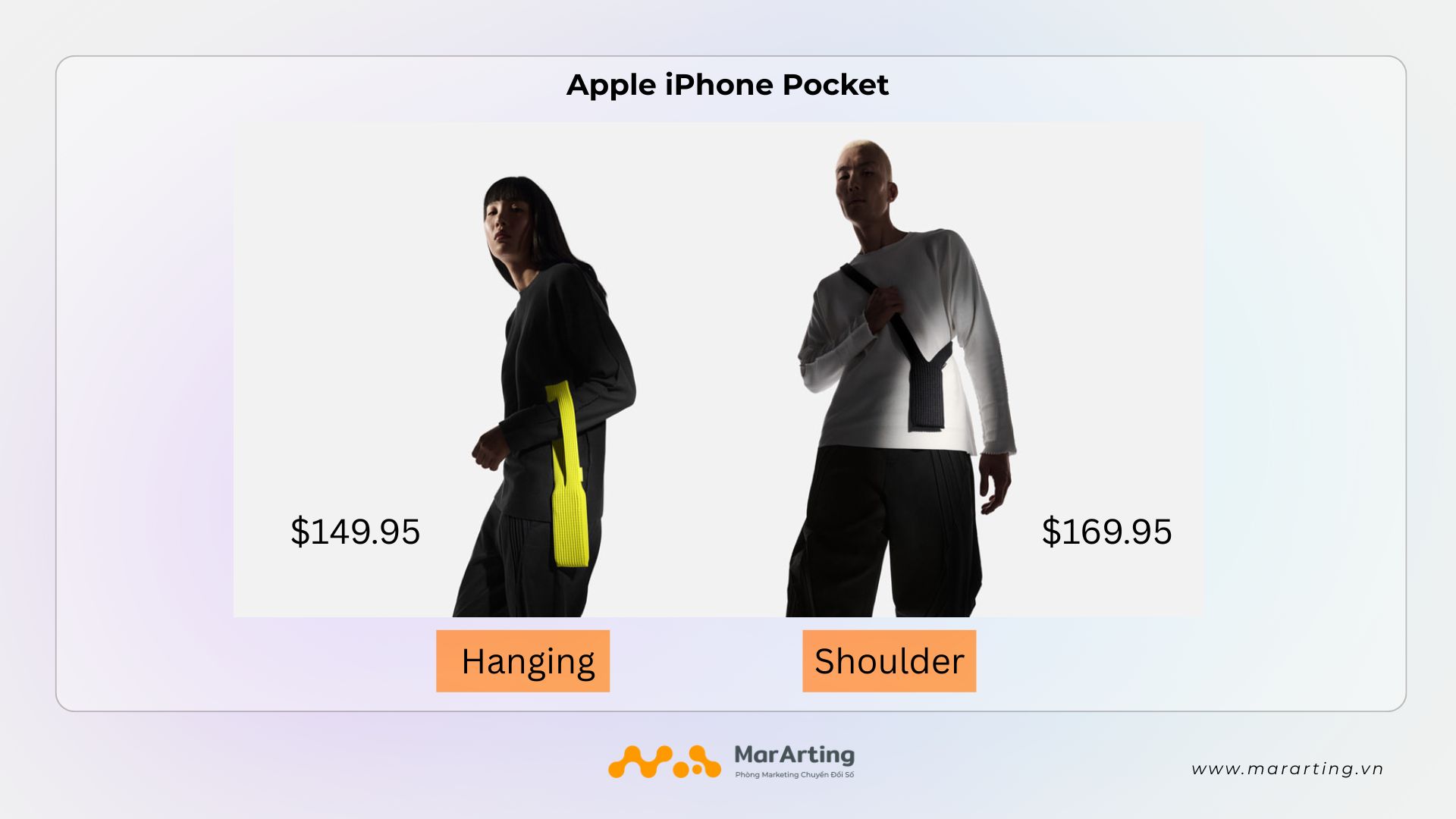
The product comes in two versions: “Hanging” ($149.95) with short string and “Shoulder” ($169.95)with long string.
It is important to note: This bag has no technological function. It is no shockproof, no waterproof, no charging, and no MagSafe. It merely performs the function of "autopilot".
Apparently, $149.95 is not the price for the material. So, where's the real value?
2. Decoding Invisible Values: Three Valuation Pillars
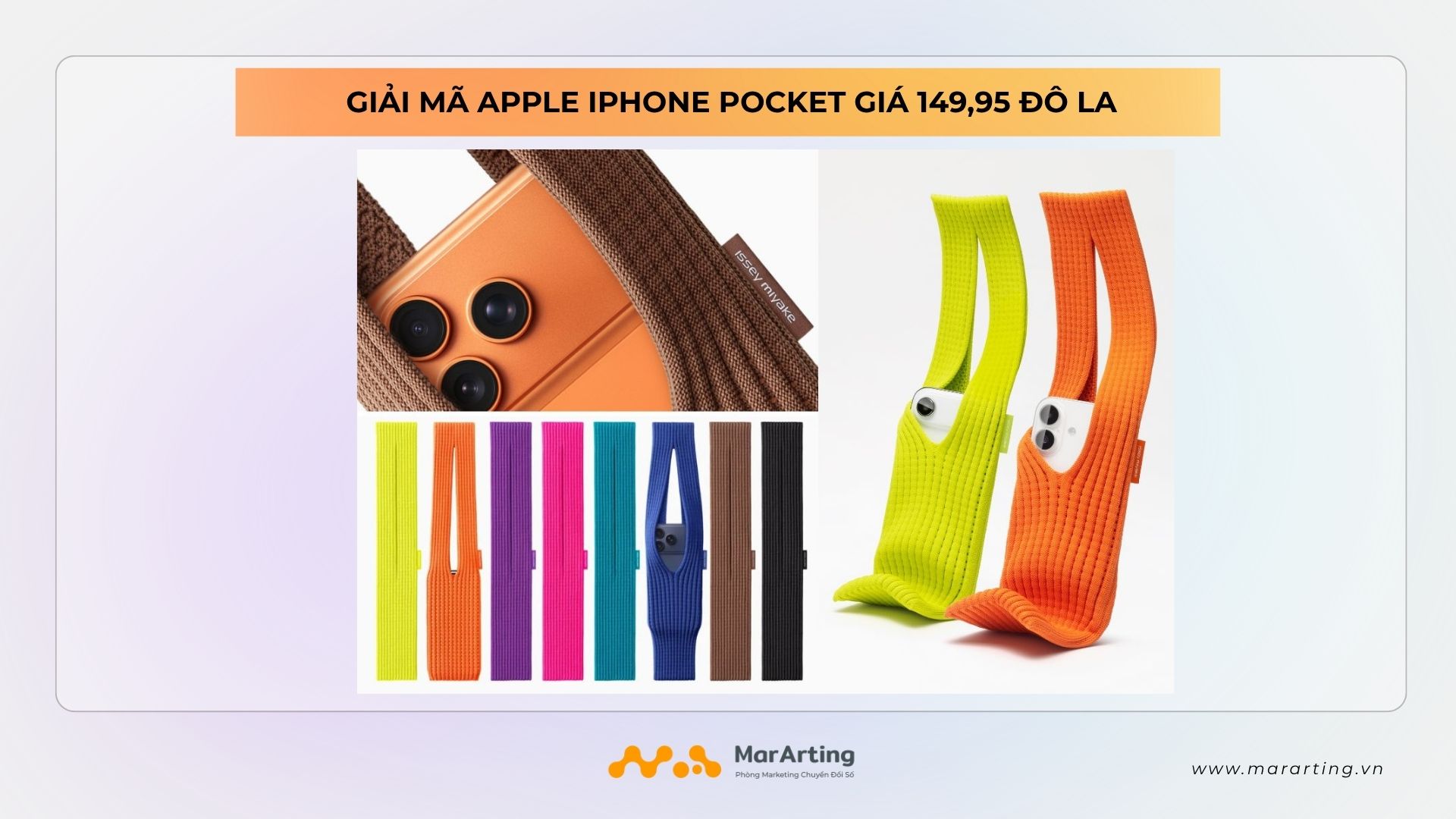
Much of the value of the product lies in the “invisible" factors
The Power of Heritage (Brand Heritage)
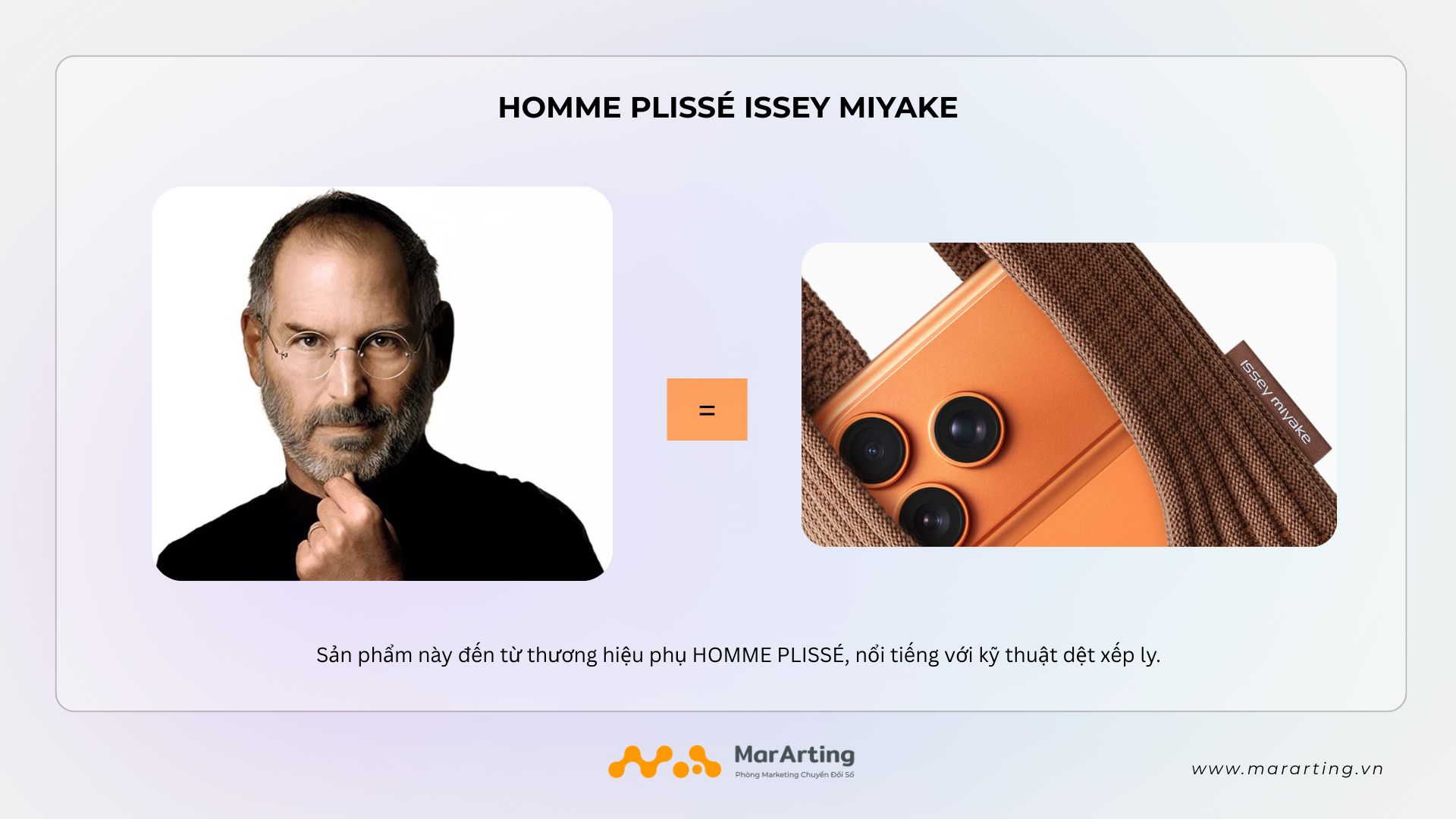
This is Apple's “extortion card”. This handshake is with... Issey Miyake, legendary Japanese brand.
The strategic link is this. Steve Jobs. The fashion house Issey Miyake designed Steve's iconic black turtleneck.
The marketing logic here is clear:
- Steve Jobs wore Miyake's clothes.
- This bag belongs to Miyake.
- Therefore, owning this bag means “touching the legacy of Steve Jobs”
This bag is not only woven with polyester; it is woven with “inheritance” and “Apple spirit”
Positioning “High Fashion” (Fashion Positioning)
Products of sub-brands HOMME PLISSÉ ISSEY MIYAKE , famous for pleating weaving technique.
By labeling this, Apple and Miyake have taken a smart positioning move: This is not a technological accessory, this is High fashion.
In the world of high fashion, prices are not related to production costs. The value is determined by how much the brand “dám” values it and the level of desire it creates.
Price anchoring
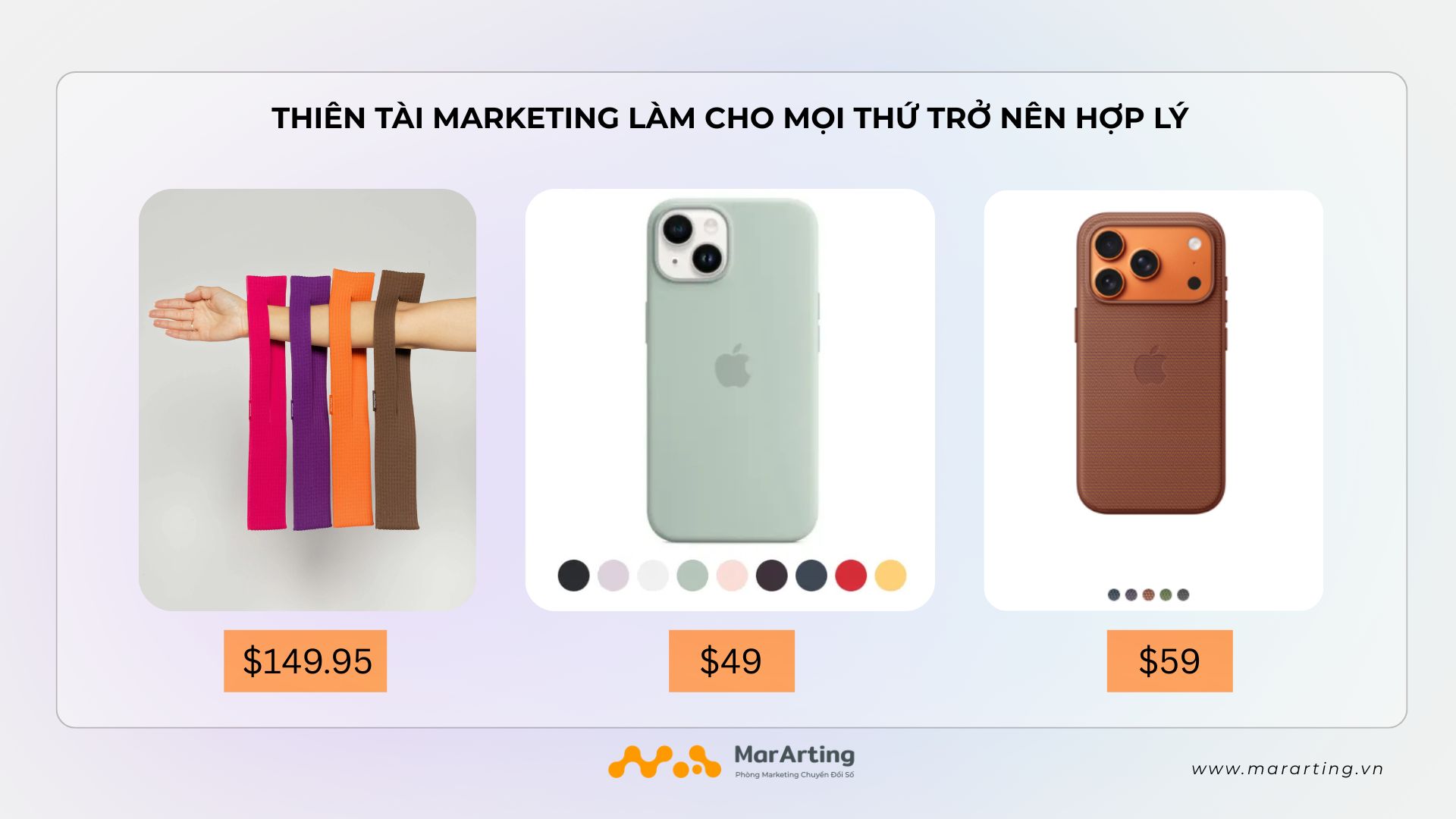
As marketers, we have to admire this strategy. Apple iPhone Pocket $149.95 is a “the perfect price anchor”.
When consumers look at the price of $149.95 for a woven bag, Apple's $59 leather case or $49 silicone case suddenly becomes more affordable. magically logical. This is a masterful psychological move.
Marketing Based on “Lifestyle Marketing”
Apple does not sell accessories, they sell a “lifestyle”
They are selling customers the role of a “technology fashionista". And 149.95 USD is “ticket entry” for this role. The customer is not buying a bag; they are buying the right to “flex” that they understand Issey Miyake.
Apple has created a new type of “tax”: “Exquisite Tax”. Not only do customers buy iPhones, they also have to pay an additional fee to prove that they are “cool" users, “knowledgeable" and “with taste”
Target Audience (Target Audience)
This product is bound to “fire", not because it's affordable, but because it targets specific customer segments:
- The “sheep” Issey Miyake: People who already own the company's beaker products. For them, $149.95 for an Issey Miyake item is “cheap".
- Apple Collectors (The Collector): These people buy because of the “limited edition" and because this is a historic handshake. They'll buy it for storage and viewing.
- The Hypebeast: The customer group needs a new item to “outfit" and take OOTD photos. They are more interested in “hype” than “heritage”.
- People who “accidentally get rich”: The customer group had $149.95 and did not hesitate much.
Conclusion: A Case Study on Boldness
Apple iPhone Pocket 149.95 USD is an extraordinary product, not in terms of technology, but in terms of bold in brand strategy.
It is the culmination of the art of turning an unnecessary item into a desirable luxury. This is a “joke” told by two extremely serious brands, and customers are the ones who pay to be involved in that story.
If the customer needs a solution to protect the iPhone, a $30 case is enough.
But if customers have 149.95 USD and want to convey a message that: “I understand the philosophy of Issey Miyake, and I also touch the legacy of Steve Jobs”, Apple has created this product exclusively for them.
Translated from the Vietnamese original using VinAI Translate.
149.95 USD · Apple · Apple iPhone Pocket · Case Study Marketing · CHIẾN LƯỢC MARKETING · Di sản thương hiệu · Định vị thương hiệu · Giá trị vô hình · HOMME PLISSÉ ISSEY MIYAKE · Issey Miyake · Khách hàng mục tiêu · Lifestyle Marketing · Marketing xa xỉ · Mỏ neo giá · Steve Jobs · Thuế Tinh tế · Túi dệt kim