
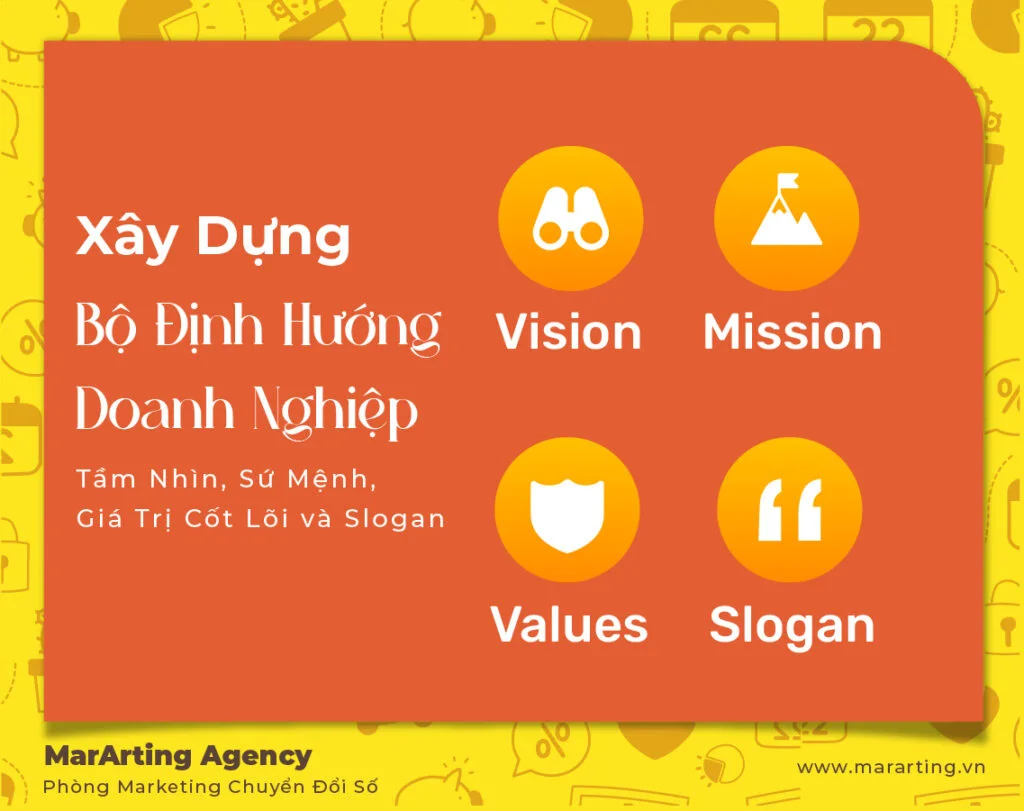
The enterprise orientation, which includes vision, mission, core values and slogan, is the guiding principle for all activities of an organization. It not only helps businesses identify goals, develop directions, but also build business documents and create trust for customers. This article will delve into each of the driving factors, how to build them effectively, and practical examples you can apply to your business.
Contents
1. Vision (Vision):
1.1. Vision Definition

A vision is a picture of the future you want to achieve. It expresses aspirations, long - term goals, and business development direction. The vision is not only a mere business goal but also a big idea, a dream that the business wishes to turn into reality.
1.2. The Importance of Vision
- Motivation and inspiration: Vision creates a common goal for the entire organization, helping employees be motivated and inspired to work towards that goal.
- Attract and retain talents: A compelling vision that attracts talented and passionate people and keeps them engaged with the business for a long time.
- Make a difference: Vision helps businesses make a difference from competitors, attract the attention of customers and partners.
- Decision Guidelines: Vision is the business's ability to make critical strategic decisions, ensuring that all activities are geared towards a common goal.
- Building corporate culture: Vision is an important part of the corporate culture, which helps shape the values and beliefs of employees.
1.3. How to Build an Effective Vision
- Clear and specific: The vision should be achieved in a clear, specific and understandable way so that all members of the business can grasp and implement.
- Inspirational: Your vision should inspire and arouse passion in your employees.
- Practical and feasible: The vision should be based on the reality and capabilities of the business, not too far off or unattainable.
- In relation to mission and core values: The vision needs to fit and support the mission and core values of the business.
- Shared and supported: The vision should be shared across the business and supported by everyone.
2. Mission (Mission):
2.1. Mission Definition

Mission is the reason for the existence of the business, which can realize the goals and values that the business brings to society and customers. Our mission is to answer the questions “Why do we exist?" and “What are we doing?"
2.2. The Importance of Mission
- Operational Orientation: Our mission is to help businesses identify their areas of operation and focus on what they do best.
- Motivating employees: Our mission is to help our employees understand their work goals and feel the meaning of what they do.
- Attract customers and partners: A clear mission to help businesses attract customers and partners with the same values and goals.
- Building Trust: Mission can fulfill the commitment of the business to society and customers, help build trust and credibility.
2.3. How to Build an Effective Mission
- Concise and easy to remember: Your mission should be concise, memorable, and easy to understand.
- Demonstrate core values: The mission should reflect the core values of the business.
- Feasibility: Missions need to be realistic and achievable.
- There are different properties: Your mission should differentiate you from your competitors.
3. Core Values:
3.1. Core Value Definition

Core values are the basic principles, beliefs and ethical standards that shape the culture and behavior of the business. We are the guideline for all decisions and operations of the business.
3.2. The Importance of Core Values
- Formulation of enterprise documents: Core values are the foundation for building a strong and cohesive corporate text.
- Attract and retain talents: Employees tend to stick with businesses whose core values are aligned with their own.
- Building Trust: The value core can fulfill an enterprise's commitment to business ethics and social responsibility.
- Decision Guidelines: Core values help businesses make the right decisions in all matters.
3.3. How to determine Core Values
- Identify your most important values: Businesses need to identify the most important values to themselves and their customers.
- Clearly stated: Your core values should be clear, specific, and easy to understand.
- Expressed in action: Core values are not just essential words that can be present in all activities of the business.
- Regular reviews and updates: The value core needs to be assessed and updated regularly to match the development of the business and the business environment.
4. Slogan (Slogan):
4.1. Slogan Definition

A Slogan is a short, memorable tagline that expresses the main message of a business or product. Your slogan is important in building your brand and creating an image for your customers.
4.2. Importance of Slogan
- Make a Strong Impression: Slogans help businesses make a strong impression on customers and easily remember the brand.
- Convey the message: Slogans are short and effective ways to convey the main message of a business or product.
- Strengthen brand identity: Slogans help customers easily recognize and distinguish your brand from competitors.
4.3. How to Build an Effective Slogan
- Concise and easy to remember: Slogans should be short, analytical, and easy to remember.
- Demonstrate value and benefits: Your slogan should reflect the value and benefits your business or product brings to your customers.
- Be Creative: Your slogan should be creative, unique, and different from your competitors.
- In line with the objectives: Your slogan should be aligned with your business or product's goals.
Results of study
Building a business orientation is an important process, requiring time and effort investment event. However, the benefits are enormous. A clear and strong orientation will help businesses orient development, attract talents, build trust with customers and partners, thereby achieving sustainable success.
Translated from the Vietnamese original using VinAI Translate.
bộ định hướng doanh nghiệp · Chiến lược kinh doanh · giá trị cốt lõi · slogan · sứ mệnh · tầm nhìn · văn hóa doanh nghiệp · Xây dựng thương hiệu