
In the modern business world, understanding your customers and how they interact with your brand is a key factor to success. This is especially true in the context of fierce competitive environments and rapid market volatility. An important tool to help you do this effectively is a Customer Journey Map. In this article, we'll delve deeper into what a Customer Journey Map is, why it's important, and how to create an effective customer journey map.
Contents
1. Concept of Customer Journey Map
A Customer Journey Map is a graph or chart that describes the touchpoints customers may encounter when interacting with your brand. Not only will it tell you what these touchpoints are, but it will also help you better understand the emotions, needs, and goals of the customer at each of them.
2. The Importance of Customer Journey Maps
- Deep understanding of customers: By analyzing and creating a Customer Journey Map, you can gain a better understanding of customers' behaviors, wants and needs throughout their interactions with your brand.
- Optimize customer experience: With an understanding of the challenges and desires of your customers at each stage of their journey, you can optimize their experience, from finding information to purchasing decisions and after-sales.
- Identify opportunities for improvement: By analyzing the Customer Journey Map, you can identify weaknesses in customer experience and identify opportunities for improvement to enhance customer satisfaction and loyalty.
3. Customer Journey (Customer Journey)
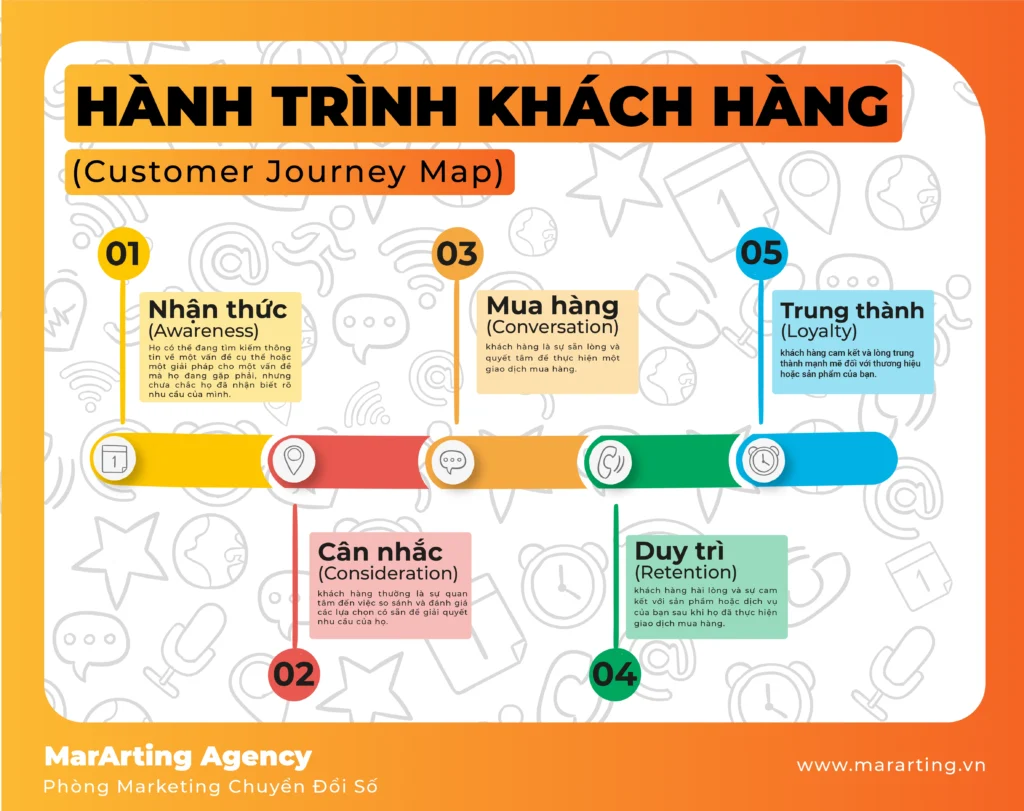
Phase 1: Awareness
At this stage, customers are just beginning to become aware of the existence of your brand and products/services. They may have seen advertisements online or on social media, or they may have been referred from another source. This is the critical stage to grab their attention and make them want to learn more about your product or service.
Content for this phase may include:
- A blog post or website about your product/service and its value.
- Advertise online or on social media to create brand awareness.
- Featured content about outstanding features of the product/service or special offers that customers can get.
Phase 2: Consideration
During this stage, customers have begun to review your product or service and compare it with other options. They can look for more detailed information about your product/service and how it can address their needs. This is a crucial time to provide insight and reasons for customers to choose your brand.
Content for this phase may include:
- Detailed articles or reviews about your product/service and comparisons with other products/services on the market.
- Video demo or product images to help customers better understand how the product/service works.
- Articles about use cases or success stories from current customers.
Phase 3: Purchase Decision (Conversation)
During this stage, the customer has decided to purchase your product or service. They may be looking for information about how to make a purchase in the easiest and most convenient way. This is an important time to create a positive buying experience and validate the customer's decision.
Content for this phase may include:
- Detailed order instructions or purchase instructions on your website.
- Reviews and feedback from previous customers to provide confidence and encouragement for the customer's purchase decision.
- Special offers such as discounts or accompanying gifts to encourage customers to complete transactions.
Stage 4: Retention
After the customer has made a purchase, the retention phase is important to retain them and create a lasting relationship with them. During this stage, providing after - sales customer support and care is crucial to ensuring they are happy with their experience.
Content for this phase may include:
- Email customer care to ask for advice or provide support after purchase.
- User manuals or video tutorials to help customers make the most of their products/services.
- Special promotions or offers dedicated to existing customers to mark appreciation of them.
Stage 5: Loyalty
The loyalty phase is when customers become loyal supporters of your brand and are willing to share their positive experiences with others. During this stage, creating a loyal and passionate customer community is critical to maintaining and developing relationships with customers.
Content for this phase may include:
- Customer reward programs or points to mark appreciation of loyal customers.
- Online community group where customers can share their experiences with each other and create a supportive community.
- Offline event dedicated to loyal customers to create an opportunity to meet and connect with each other.
Conclusion
Each stage of the Customer Journey Map has its own distinct content to meet the needs and desires of customers in each stage of their journey of interaction with your brand. Ensure that you provide the right information and experience to help customers move to the next stage and create a lasting relationship with your brand.
Translated from the Vietnamese original using VinAI Translate.