

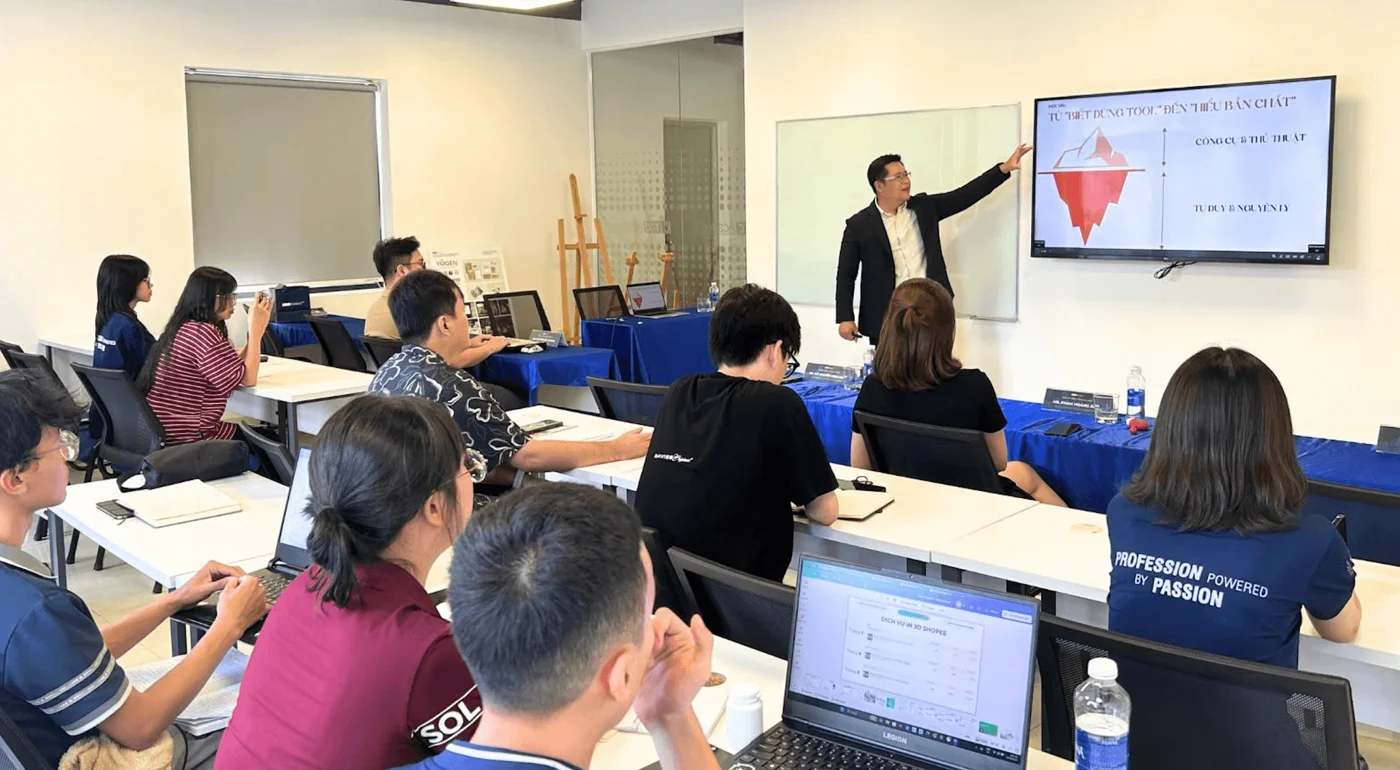
On July 8, 2026, Da Nang newspaper published the article “From knowledge to working capacity” by author Hoang Linh. The article mentions the work of Do Nguyen Minh Khoi at two places: FPT Polytechnic Da Nang lecture hall and MarArting Agency. Why is a lesson given to a marketing team by a client worth taking to the classroom? For us, the most rewarding part of learning often lies in the moment when people have to make decisions, when data is lacking and customers are waiting for an answer.
When the assignment is only one sentence long
Try to put yourself in a situation where an owner of a restaurant says: "The next month, the restaurant wants to be more crowded". A beginner in advertising may immediately think of short videos, offers, or radius ads. But just asking when the bar was empty, the assignment could have changed. A Saturday night - only but - late - night stall often needs a different plan than the less - known new one. It determines who needs to hear the message, at what time and for what reason.
In an assignment, the learner may spend the first page writing down three things: what the client actually said, what he temporarily inferred, and what he did not know. “Want more customers” belongs to the first group. “Guests who do not know the restaurant” is just speculation. The number of available tables per hour is the information to ask. When you place the three groups side by side, the group will see where there is enough ground to make a plan and where a short call with the manager is needed before moving on.
Asking questions is also part of the job
A good question helps the listener answer with a specific experience. Instead of asking the owner to describe the “look of the target customer”, ask about the three most recent reservations: how many people are there, where the restaurant is from, and what to ask before closing the table. The answer may indicate that parking location or service time is a major concern. The writer has the material to edit an introduction that only lists the food and the price.
One way to practice this skill is to have two groups use the same problem. The first group acts as managers, keeping the tables and staffing schedules. The second group was asked only five questions before planning. After the discussion, both sides mark which questions really changed the decision. The exercise ends with revising the list of questions. Through that revision, learners may find a short question about service hours more valuable than a general question about brand vision.
Make choices when budgets are limited
While time and budget are on paper, any of these options seem feasible. Add a constraint to the example above: the team only has one shoot at the bar and the chef is only available before noon. The group who wanted to make four videos now had to agree on which scenes were required. If your goal is to increase your office lunch reservations, a scene that shows the time from ordering to getting to the table can be more useful than multiple shots of the same dish from different angles.
To protect the choice, each team could write a short piece for the person who would pay for the production. It should tell you which customers are going to watch the video, what they're wondering about, and how the footage will help them decide. Then change roles: another member who owns the inn, is allowed to ask how the plan would affect if the scene were to be cut. When it comes to expressing a decision in the language of the customer, learners often discover items they put in because they look good.
Hand it over so your teammates can continue.
An idea can still fail at handover. The writer envisioned a family of four eating out, while the producer invited a model to go alone. Both parties found that they had read the phrase "lunch at the restaurant". To avoid this, the assignment should clearly state the situation, the actions, and the details that must appear. For video reservations, the information about the phone number or text button will also need to be checked by the person in charge before posting.
In class, you might try giving the assignment to a group that hasn't attended the meeting yet. Give them ten minutes to make a list of props, personnel, and footage. The questions they had to go back to were vague documents. If the team did it without the idea writer explaining it, the writer created a usable product. This is a way of judging by an observed result, even if the classroom doesn't yet have real cameras.
Read results with questions at the beginning
Let's say that the video of the restaurant has been seen by a lot of people, but the number of lunch tables hasn't increased. There are at least three things to check before you conclude that the content is bad. Are the viewers near the bar? Did they find a way to book a table on the phone? Did the staff respond in time as they were selecting a place to eat? Only by following each step will the team know whether to change the message, re-set the table, or re-coordinate with the message team. As an example, the actual business figures must be recognized by the custom.
If we're using that as a closing, we'll want to see both the first plan and the revised one after the new information comes in. The revision's value is in the explanation: what information caused the team to change their decision, and how that change will be checked. A student might start off with a false assumption, but the way he or she finds the flaw, communicates with his teammates, and updates his or her plan shows more competence than a polished presentation.
A story that's clear enough to be interviewed
When describing a project, beginners often list the tools they used. Try telling your story in four sentences: where the client is struggling, what part of the job he or she is doing, what options he or she has chosen, and what he or she learned from it. If you're working in a group, specify who's in charge. If the new project stops at simulations, specify which data is hypothetical. This will help the interviewer understand how you're thinking and will help you reflect on the part of the job you want to learn.
There's one small detail worth keeping on file: the first response that changes your mind. A question from the operator or a note from your cameraman sometimes explains the progress of the project better than a final product shot. Recording feedback is also a way to acknowledge your teammates' contributions and show readers what you have learned from the people who directly use your work.
Original source: Báo Đà Nẵng, 08/07/2026.
View all press coverage