
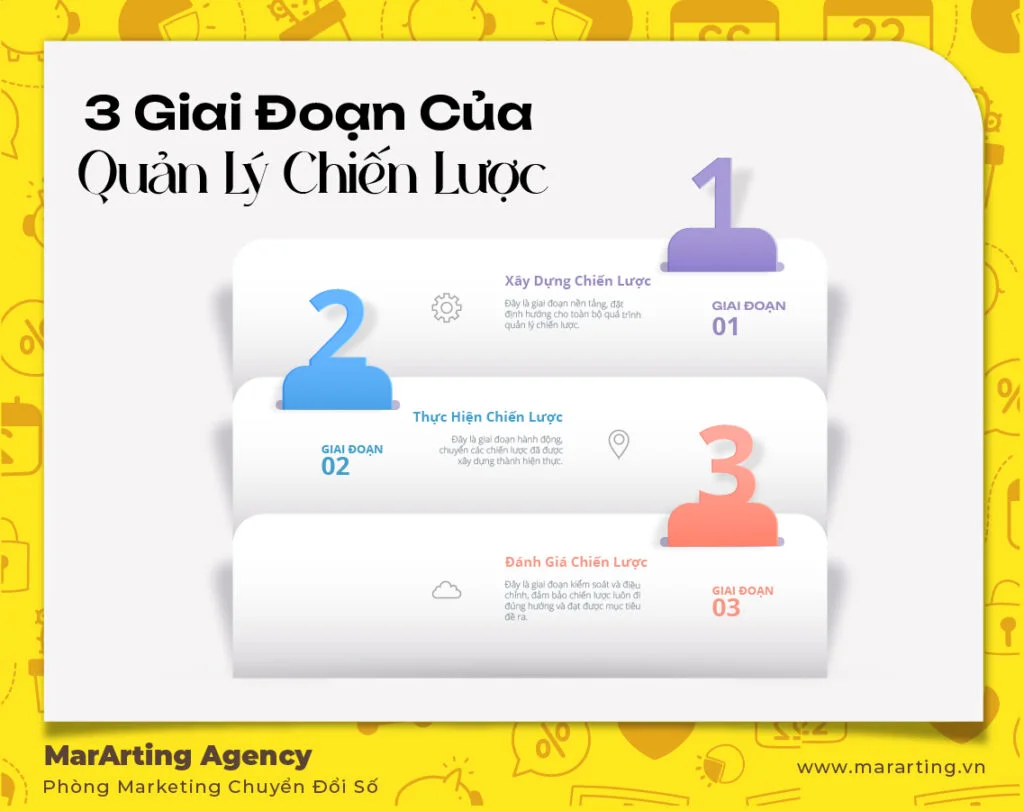
Strategy management is a continuous and systematic process that helps businesses orient, develop and achieve long-term goals. For effective implementation, the strategy management process is divided into three main stages: Strategy Formulation, Strategy Implementation, and Strategy Evaluation.
Contents
Phase 1: Developing the Strategy

This is the foundational stage that sets the direction for the entire strategic management process. This phase includes the following steps:
1. Define Vision, Mission and Core Values:
- Vision (Vision): Describe the ideal state the business wants to achieve in the future. Vision is the inspiration and motivation for all activities of the business.
- Mission (Mission): Specify the purpose of the business and why it operates. Our mission is to answer the questions “Why do we exist?" and “What do we do?"
- Core Values: These are the basic principles, beliefs and ethical norms that shape the culture and behavior of the business.
2. Business Environment Analysis:
- Internal Environment Analysis: Assess strengths and weaknesses of the business through tools such as VRIO (Value, Rare, Difficult to imitate, Organization).
- External Environment Analysis: Assess the political, economic, social, technological, legal, and environmental (PESTLE) factors that can affect the business.
3. Identify Strategic Goals:
- Financial objectives: Revenue, profit, market share, etc.
- Non - financial objectives: Brand, customer satisfaction, social responsibility, etc.
4. Build Strategic Choices:
- Growth strategy: Market expansion, new product development, business diversification, ...
- Stable strategy: Maintain current market share, improve operational efficiency, etc.
- Shrinking strategy: Withdrawal from the inefficient market, restructuring of enterprises, ...
5. Optimal Strategy Selection:
- Assess strategic options based on criteria such as feasibility, suitability with resources, profitability, etc.
- Choose the strategy that best suits your business's situation.
Phase 2: Implementing the Strategy

This is the stage of action, which translates the strategies that have been built into reality. This phase includes the following steps:
1. Resource Allocation:
- Determine and allocate necessary resources (financial, human resources, technology, etc.) for the implementation of the strategy.
- Ensure that resources are used efficiently and for the right purposes.
2. Organizational Structure Design:
- Build an organizational structure in line with the chosen strategy.
- Clear assignment of responsibilities and powers to each department and individual.
3. System and Process Development:
- Establish systems and processes that support the implementation of the strategy.
- These systems and processes may include: management information systems, quality management systems, risk management systems, etc..
4. Managing People:
- Recruit, train and develop qualified and skilled personnel to implement the strategy.
- Motivate and encourage employees to participate in the implementation of the strategy.
5. Control Strategies:
- Establish control mechanisms to ensure the strategy is implemented according to plan and achieved goals.
- Adjust your strategy as needed to adapt to changes in the business environment.
Phase 3: Strategic Assessment

This is the stage of control and adjustment, ensuring the strategy stays on track and achieves its goals. This phase includes the following steps:
1. Measurement System Setup:
- Identify performance metrics (KPIs) to track the progress of the strategy.
- KPIs can include: revenue, profit, market share, customer satisfaction, etc.
2. Tracking and Evaluation:
- Regularly collect and analyze data to evaluate the effectiveness of the strategy.
- Compare your actual results to your goals.
3. Adjust the Strategy (if necessary):
- If the strategy does not achieve the expected effect, it is necessary to adjust or change the strategy.
- Adjustments may include: goal changes, resource allocation adjustments, process improvements, etc..
Conclusion
Strategy management is a continuous and continuous process of improvement. By adopting a formal strategic management process, businesses can improve their competitiveness, adapt to change and achieve sustainable success in a volatile business environment.
Translated from the Vietnamese original using VinAI Translate.
Đánh giá chiến lược · kiểm soát chiến lược. · mục tiêu · phân tích PESTLE · Phân tích SWOT · Quản lý chiến lược · sứ mệnh · tầm nhìn · Thực hiện chiến lược · triển khai chiến lược · xây dựng chiến lược