
In the context of volatile global business, analyzing the business environment has become more important than ever. PESTEL model is a useful tool to help businesses assess external factors that may affect their operations, thereby building an appropriate and effective business strategy.
Contents
What is PESTEL?

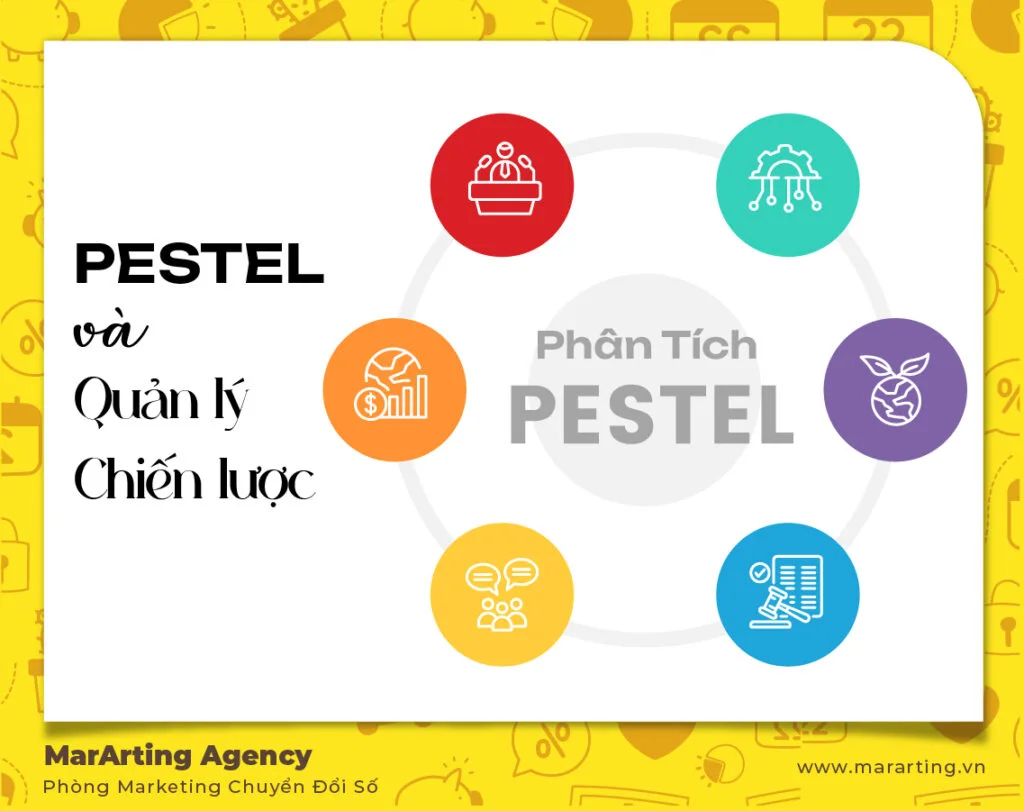
PESTEL stands for Elements:
- Political (Political): Government policy, political stability, laws, regulations, ...
- Economic (Economic): Economic growth, interest rates, exchange rates, inflation, ...
- Social (Social): Demographics, lifestyle, culture, consumption trends, ...
- Technological (Technology): Technological development, automation, research and development,...
- EEnvironmental: Climate change, environmental pollution, sustainable energy use, etc.
- Legal (Legal): Business law, labor law, intellectual property law, environmental law, ...
The Importance of PESTEL Analysis in Strategic Management

PESTEL analysis plays a key role in helping businesses make informed and effective strategic decisions.
Specifically, PESTEL analysis has the following benefits:
- Identify opportunities and challenges: PESTEL provides a comprehensive picture of the business environment, helping businesses identify external factors that can impact their operations. From there, businesses can actively seize opportunities and deal with challenges effectively.
- Risk and potential assessment: Through PESTEL analysis, enterprises can assess the risk level and potential of each element, thereby making investment decisions, expanding markets or developing new products more accurately and effectively.
- Developing appropriate strategies: PESTEL helps businesses better understand the needs and desires of customers, as well as the development trends of the market. Based on this information, businesses can build strategies marketing, tailored products and services, better meet the needs of the market and create competitive advantage.
- Operational Optimization: PESTEL helps businesses identify factors that may affect their operational efficiency, thereby finding ways to optimize production, business and management processes. For example, businesses may adopt new technologies to improve productivity or change production processes to minimize environmental impact.
- Strengthen adaptability: The business environment is constantly changing, and PESTEL analysis helps businesses anticipate these changes and prepare appropriate response plans. As a result, businesses can quickly adapt to market fluctuations and maintain stability in their business operations.
Process Build Strategy Management with PESTEL

- Determine the Scope of Analysis: Specify the scope of PESTEL analysis, be it a country, a region or global.
- Information Collection: Collect information about PESTEL elements from various sources such as market research reports, government publications, reputable news sites, ...
- Analysis and Evaluation: Analyze and evaluate the impact of PESTEL on the business activities of the enterprise.
- Identify Opportunities and Challenges: From the results of the analysis, identify potential opportunities and challenges for the business.
- Developing Strategy: Based on identified opportunities and challenges, develop appropriate business strategies to leverage opportunities and minimize risks.
- Implementation and Evaluation: Deploy strategy and regularly monitor and evaluate the effectiveness to make timely adjustments.
PESTEL Application Example:
Fashion Industry:
- Political: Trade policies, tariffs, labor laws ...
- Economic: Economic situation, consumer purchasing power, inflation...
- Social: Fashion trends, conception of beauty, lifestyle ...
- Technological: The development of e-commerce, new production technologies ...
- Legal: Regulations on product quality, consumer protection, intellectual property ...
- Environmental: Awareness of sustainable fashion, using environmentally friendly materials ...
Food Industry:
- Political: Policies on food safety, quality standards, regulations on import ...
- Economic: Income of consumers, trends in consumption of clean and organic food ...
- Social: Lifestyle changes, health concerns, healthy eating trends...
- Technological: Food preservation technology, new production technology, application of technology in traceability ...
- Legal: Regulations on food labeling, food advertising, food hygiene and safety ...
- Environmental: The impact of climate change on agricultural production, the trend of using environmentally friendly packaging ...
Conclusion
PESTEL analysis is an indispensable tool in strategic management, helping businesses understand the business environment and build appropriate strategies. By applying PESTEL analysis effectively, businesses can take advantage of opportunities, minimize risks and achieve sustainable success.
Translated from the Vietnamese original using VinAI Translate.
Chiến lược kinh doanh · cơ hội và thách thức · ngành công nghiệp thời trang · ngành công nghiệp thực phẩm. · PESTEL · phân tích môi trường · Quản lý chiến lược · quy trình phân tích PESTEL · ví dụ PESTEL · yếu tố chính trị · yếu tố công nghệ · yếu tố kinh tế · yếu tố môi trường · yếu tố pháp lý · yếu tố xã hội